

 Français
 Deutsch
 Español
 Italiano
How to Price Your Laser Engraving and Cutting Services
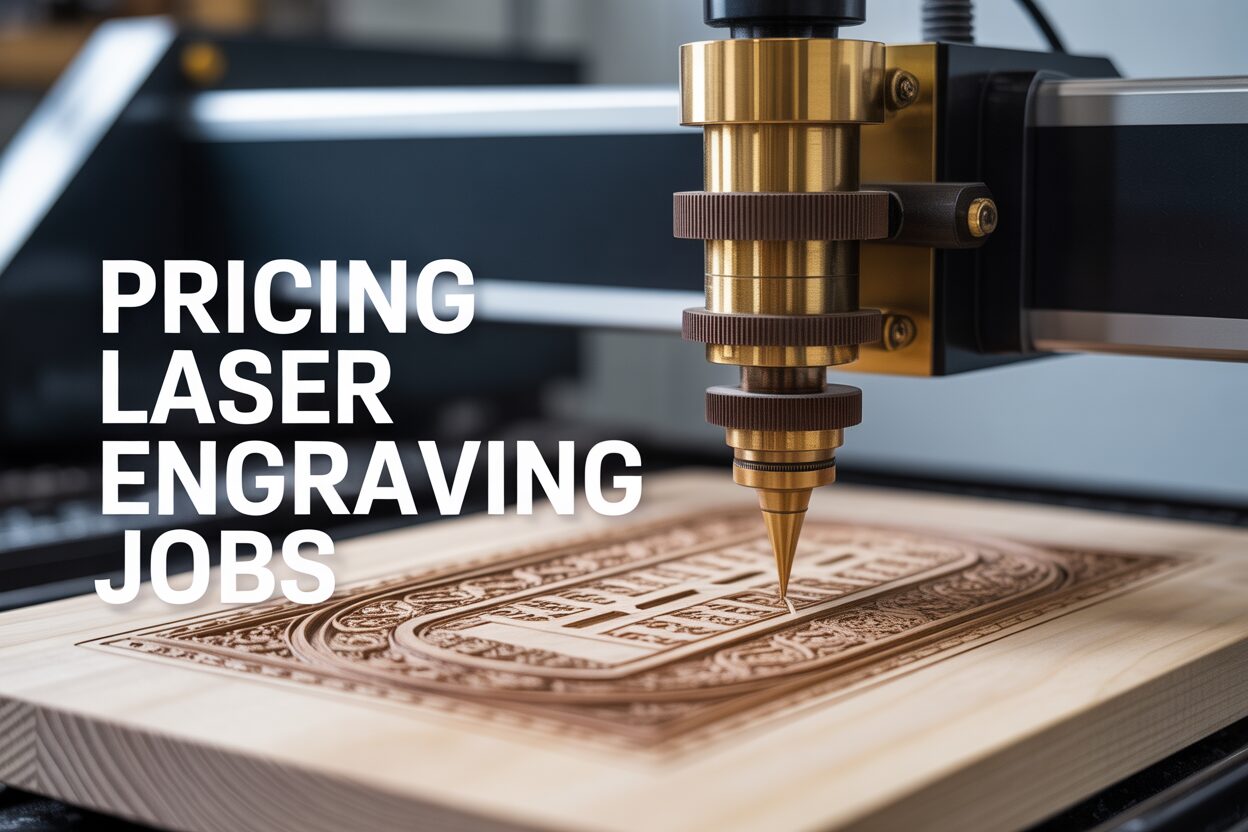
Mar
Estimated reading time: 7 minutes
Key Takeaways
- A project’s total cost is determined by multiple factors, including materials, design complexity, project size, and crucial “hidden” labor costs like setup, file prep, and post-processing.
- Common pricing models include hourly rates (for custom work), flat-rate pricing (for standard products), and per-square-inch calculations (for large or dense engravings). A hybrid approach is often the most effective strategy.
- A laser cutting pricing calculator is a vital tool for ensuring consistency and profitability. It systematically accounts for all variables, including machine time, material costs, labor, and machine wear and tear.
- To ensure profitability, you must calculate your break-even price by summing all costs and then apply a desired profit margin to determine the final quote for the customer.
Table of Contents
- Key Factors That Determine Laser Engraving Costs
- Popular Pricing Models for Your Laser Services
- Leveraging a Laser Cutting Pricing Calculator for Accuracy
- Conclusions
- Frequently Asked Questions
Determining the right price for your laser engraving services is crucial for profitability and business growth. This guide explores various factors and models for pricing laser engraving jobs effectively. We’ll cover everything from material costs and design complexity to different pricing strategies, ensuring you can confidently and competitively price your work for maximum success.
Key Factors That Determine Laser Engraving Costs
To accurately price your services, you must first understand that the total laser engraving cost is far more than just the time your laser is actively firing. A profitable business is built on accounting for all inputs, both tangible and intangible. When you’re pricing laser work, breaking down your costs into distinct categories ensures you cover all your expenses and generate a healthy profit margin. These factors are the fundamental building blocks of any pricing model you choose to adopt.
Material Costs: The Foundation of Your Price
The most direct cost associated with any project is the material itself. This can vary dramatically depending on the client’s request. Common materials include:
- Wood: The price can range from inexpensive birch plywood to premium hardwoods like walnut or cherry. You must also account for the fact that not all wood is created equal; a warped sheet of plywood may be unusable, and a piece of hardwood with an unsightly knot may need to be discarded. Always factor a certain percentage for waste and test cuts into your material cost.
- Acrylic: Cast acrylic, which engraves with a frosty white finish, is typically more expensive than extruded acrylic, which engraves clear. Knowing the difference and pricing accordingly is crucial for selling laser engraved products that meet customer expectations.
- Slate: Popular for coasters and signs, slate can have inconsistent quality. The cost of sourcing high-quality, uniform pieces is higher than buying bulk, lower-grade slate that may have imperfections or engrave unevenly.
Your material cost calculation should not only cover the portion used in the final product but also the entire stock piece it was cut from, unless you are confident you can use the remnants for other projects.
Design Complexity and Engraving Time
Not all designs are created equal. The complexity of the artwork directly impacts both the setup time and the machine’s run time. A simple line of text will engrave in a fraction of the time it takes to engrave a high-resolution photograph. When a customer provides a complex, detailed vector file or a dense raster image, the laser head must make significantly more movements, extending the job duration. This machine time is a primary driver of your price. Furthermore, complex designs often require more pre-production work. A low-quality JPG might need to be converted, cleaned up, and dithered for engraving, which is billable design time. A simple, clean vector file, on the other hand, requires minimal preparation. Factoring in a “design prep fee” for complex or poor-quality files is a standard and necessary practice.
Size of the Project
The physical dimensions of a project influence the cost in two primary ways: material usage and machine time. A larger engraving naturally consumes more material, which is a straightforward cost to calculate. It also occupies the laser bed for a longer period. A full-bed engraving on a large sign can tie up your machine for hours, preventing you from running smaller, quicker jobs. This “opportunity cost” is an important consideration. When quoting large projects, remember that you aren’t just selling the finished piece; you are selling a significant block of your machine’s productive capacity.
Labor and Setup: The Hidden Costs
This is the area most often underestimated by newcomers. The time the laser isn’t running but you are working on the project is just as valuable. This labor is a critical component and a key differentiator when selling laser engraved products that are high quality. This includes:
- File Preparation: Time spent communicating with the client, opening their file, checking it for errors, assigning colors for cutting and engraving settings, and laying it out in your software.
- Machine Setup: Cleaning the machine’s optics, placing the material in the bed, ensuring it is level and properly aligned, focusing the laser, and running a test fire. For jobs with multiple identical items, this may also include creating a jig to ensure consistent placement.
- Post-Processing: Once the laser is finished, your work often isn’t. This includes removing the item, cleaning off any smoke residue or masking tape, sanding, painting color-fill into engravings, applying a protective finish like oil or lacquer, and assembling any multi-part pieces.
Each of these steps adds time and, therefore, cost to the project. Meticulously tracking this time is essential for accurate and sustainable pricing laser work.
Popular Pricing Models for Your Laser Services
Once you have a firm grasp of the cost factors involved in a project, you can begin structuring your prices using a consistent model. The right pricing model provides transparency for your customers and ensures profitability for your business. There is no single “best” method; the ideal choice depends on your business style, the types of jobs you typically handle, and your target clientele. Exploring the most popular models is the first step in developing a robust strategy for pricing laser work.
The Hourly Rate Model
This is one of the most straightforward methods. You calculate a total hourly rate for your machine’s operation time that covers all your business expenses and desired profit. To determine this rate, you must first calculate your total monthly overheads (rent, electricity, software, insurance, machine maintenance, etc.), add your desired monthly salary and profit, and then divide that total by the number of billable hours you realistically expect to work in a month. Remember, “billable hours” are the hours the machine is actually running on paid jobs, not the total hours you are in your workshop. This model is excellent for one-of-a-kind custom jobs where the time required is difficult to predict.
- Pros: Ensures all your time is covered, especially on complex or unpredictable projects. It’s fair to both you and the client, as they only pay for the time used.
- Cons: Can be difficult to provide a firm quote upfront, which some customers dislike. It can also penalize efficiency—the faster and better you get, the less you make on a similar job.
The Flat-Rate Pricing Model
This model involves setting a fixed price for a specific, repeatable product or service. This is the go-to method for business owners who are selling laser engraved products in volume, such as customized tumblers, slate coaster sets, or standard-sized wooden signs. To establish a flat rate, you must first meticulously track your time and material costs over several runs of the product to find a profitable average. This price includes materials, setup, machine time, post-processing, and your profit margin. It provides customers with a clear, upfront cost, which simplifies the sales process.
Interested in more Coaster? Check out our Coaster laser file designs: Click here!
- Pros: Easy for customers to understand and makes for quick quoting. Encourages efficiency, as the faster you complete the job, the higher your effective hourly rate becomes.
- Cons: If you miscalculate the time or costs involved, you can easily lose money. It is not suitable for unique, custom projects that vary significantly from one to the next.
The Laser Engraving Price Per Square Inch Model
This model calculates the price based on the physical area of the engraving. You set a specific price—for example, $0.50 per square inch of engraving—and apply it to the design’s dimensions. This method is often combined with a linear foot/inch price for cutting. It is particularly effective for large-scale engravings or jobs with intricate, dense patterns where a simple hourly estimate might be inaccurate. Software like LightBurn can calculate the total area and cutting distance, making this model easier to implement. A base setup fee is almost always added to a laser engraving price per square inch to cover the initial labor of handling the file and material.
- Pros: Highly scalable and provides consistent, predictable pricing for jobs of varying sizes. It accurately accounts for the amount of work the laser is doing.
- Cons: Can be complex to explain to customers. It may not adequately account for variations in material type or engraving depth without adjusting the base rate.
Ultimately, many successful businesses adopt a hybrid approach. They use flat-rate pricing for their standard product line, an hourly rate for custom design work and unique projects, and a per-square-inch model for large, engraving-heavy jobs. The key to successfully pricing laser work is to choose the model—or models—that best align with your workflow and provide the clarity and profitability your business needs to thrive.
Leveraging a Laser Cutting Pricing Calculator for Accuracy
While understanding cost factors and pricing models is essential, implementing them consistently across every job can be time-consuming and prone to error. This is where a laser cutting pricing calculator becomes an indispensable tool. Whether it’s a custom-built spreadsheet or a specialized software plugin, a calculator systematizes your quoting process, removing guesswork and ensuring that every quote you provide is both fair and profitable. It transforms the art of pricing laser work into a data-driven science, which is a crucial step for anyone serious about growing their business.
A robust calculator is built upon several key inputs, each representing a component of your total laser engraving cost. By accurately quantifying these variables, you can generate precise quotes in minutes. The typical inputs include:
- Machine Run Time: This is often the core of the calculation. Your calculator should have separate inputs for engraving time and cutting time, as you might bill these at different rates. Laser control software like LightBurn can provide a surprisingly accurate time estimate before you even run the job, which you can plug directly into your calculator.
- Material Costs: This input can be structured per item (e.g., $5.00 per blank tumbler) or per unit of area (e.g., $0.15 per square inch of birch plywood). A good calculator allows you to build a library of materials and their costs for quick selection.
- Labor Costs: This is your active, hands-on time and should be billed at a separate rate from the machine. It includes initial design work or file prep, machine setup (placing material, creating jigs), and all post-processing like cleaning, assembly, and packaging.
- Machine Wear and Tear: A crucial but often overlooked factor. Every hour your laser runs, it’s getting closer to needing a new tube, mirrors, or belts. Adding a small fee per job (e.g., $1-2 per hour of machine time) creates a fund for future maintenance, so these expenses don’t come out of your profit.
- Desired Profit Margin: After all costs are totaled, this is the percentage markup you apply to determine the final price. This isn’t just “extra money”; it’s what allows you to reinvest in your business, buy new equipment, and grow.
Putting the Calculator to Work: An Example
Let’s see how a laser cutting pricing calculator handles a request for a set of four custom slate coasters.
- Material Cost: You source quality slate coasters for $1.50 each. Total = 4 x $1.50 = $6.00.
- Labor (Setup): You estimate 15 minutes to review the client’s design, lay it out in your software, and set up the coasters in a jig. At a labor rate of $30/hour, this is $7.50.
- Machine Time: Your software estimates the engraving will take 6 minutes per coaster, for a total of 24 minutes. Your machine run-time rate (which includes electricity, overhead, and wear-and-tear) is $1.00 per minute. Total = 24 x $1.00 = $24.00.
- Labor (Finishing): You allocate 5 minutes for cleaning the coasters and packaging them. At $30/hour, this is $2.50.
The calculator sums these costs: $6.00 + $7.50 + $24.00 + $2.50 = $40.00. This is your break-even price. Now, you apply your desired profit margin. If you aim for a 50% margin, you mark up the cost by 50% ($40.00 x 0.50 = $20.00). The final customer quote is $40.00 (Cost) + $20.00 (Profit) = $60.00. By using this tool for pricing laser engraving jobs, you guarantee that every factor is considered, leading to consistent, defensible pricing that supports a healthy business for selling laser engraved products.
Conclusions
Pricing your laser engraving work doesn’t have to be a guessing game. By understanding the factors that influence cost, exploring different pricing models, and using tools like a pricing calculator, you can develop a strategy that ensures profitability. The key is to find a balance that values your time and expertise while remaining competitive in the market.
Frequently Asked Questions
Q: What are the most important factors to consider when pricing a laser engraving job?
A: The key factors are material cost (including waste), design complexity and engraving time (more detail equals more time), project size (material usage and machine occupancy), and all associated labor (file prep, setup, cleaning, finishing).
Q: When should I use an hourly rate versus a flat-rate price?
A: Use an hourly rate for unique, one-of-a-kind custom projects where the time is difficult to predict. Use flat-rate pricing for standard, repeatable products (like tumblers or coaster sets) where you can calculate a consistent average time and cost.
Q: Why is it important to charge for “setup” and “design” time separately from machine time?
A: Your time is valuable, even when the laser isn’t running. Charging for setup and design prep ensures you are compensated for the skilled labor of preparing files, handling materials, and post-processing, which are often significant portions of a project’s total effort.
Q: How can I account for machine maintenance and wear and tear in my prices?
A: A best practice is to add a small fee to every job, often calculated per hour of machine run time (e.g., $1-2 per hour). This creates a dedicated fund for future maintenance like replacing a laser tube or optics, so these costs don’t unexpectedly come out of your profit.
Subscribe to Our Newsletter
And enjoy FREE Download Files, SALE Alerts and Inspiring TIPS
How to Find and Use the Best Laser Engraving Files for Wood and Slate Projects
Pricing Your Laser Engraved Products for Profit
A Comprehensive Guide on How to Price Laser Engraving Jobs
Charcuterie Board Engraving File – Wine & Grapes 3D Illusion…
$4.00Original price was: $4.00.$3.00Current price is: $3.00.(25% off)
Bee and Honey Jar Charcuterie Board Engraving File | PNG Download #007…
$4.00Original price was: $4.00.$3.20Current price is: $3.20.(20% off)
Valentine Love Captions: 6 Charcuterie Board Engraving Files…
$8.00Original price was: $8.00.$5.60Current price is: $5.60.(30% off)
American Eagle Flag Laser Engraving File for Charcuterie & Cutting…
$4.00Original price was: $4.00.$2.80Current price is: $2.80.(30% off)