

 Français
 Deutsch
 Español
 Italiano
How to Create a Stunning Personalized Charcuterie Board
Jan
Estimated reading time: 8 minutes
Key Takeaways
- Material Matters Most: The choice of material, such as tight-grained Maple for high contrast, luxurious Walnut for an elegant look, or modern Slate for sharp detail, is the most critical factor for a successful and food-safe engraved charcuterie board.
- Design with Purpose: A great design complements the board. Use vector files (SVGs) for scalability and clarity. Place designs strategically, often in a corner, to preserve the main serving area and balance aesthetics with functionality.
- Precision and Safety in Engraving: The laser engraving process demands precise calibration of power, speed, and focus, which should always be tested on scrap material. Adhering to strict safety protocols, including proper ventilation and eye protection, is non-negotiable.
- Finishing is Essential: Post-engraving cleanup to remove soot and applying a food-safe finish, like mineral oil or board butter, are crucial steps. This not only enhances the wood’s beauty but also protects it and ensures its longevity.
Table of Contents
- Selecting the Right Board for Engraving
- Designing Your Custom Engraving
- The Laser Engraving Process Step-by-Step
- Finishing Touches and Aftercare
- Conclusions
- Frequently Asked Questions
Charcuterie boards are more popular than ever, and a personalized touch makes them truly special. Laser engraving allows you to add intricate designs, names, or dates, turning a simple serving board into a cherished keepsake. This guide will walk you through the entire process, from selecting the right materials to applying the perfect finishing touches for your custom creation.
Selecting the Right Board for Engraving
The foundation of a truly stunning engraved charcuterie board is the canvas you choose. Before you even think about designs or laser settings, selecting the right material is the most critical decision you’ll make. The board’s material not only dictates the aesthetic appeal and durability but also profoundly impacts the quality and ease of the engraving process. Your primary goal is to choose a surface that is both food-safe and well-suited for laser interaction, ensuring your final product is as beautiful as it is functional.
Interested in more Charcuterie Board? Check out our Charcuterie Board laser file designs: Click here!
The Best Woods for Laser Engraving
Wood is the classic choice for a charcuterie board, offering warmth, natural beauty, and a traditional feel. However, not all woods are created equal when it comes to laser engraving. The ideal wood has a tight grain, consistent density, and minimal sap or resin, which allows the laser to create a clean, sharp, and uniform mark.
- Maple: Often considered the gold standard for engraved kitchenware, Maple is a hardwood with a very light color and a subtle, closed grain. This creates the perfect high-contrast backdrop for laser engraving, making designs pop with a dark, crisp burn. Its density ensures a sharp line without much bleeding or charring. As a durable, non-porous wood, it’s exceptionally food-safe and easy to clean, making it a reliable and professional choice.
- Walnut: For a more luxurious and sophisticated look, Walnut is an excellent option. Its rich, dark chocolate color provides an elegant canvas. The laser engraving on Walnut results in a tone-on-tone effect—a slightly darker, subtle mark that looks incredibly high-end. While the contrast is lower than on Maple, the result is refined and understated. It’s a durable hardwood that stands up well to use, but its premium look often comes with a higher price tag.
- Acacia: Known for its dramatic and often unpredictable grain patterns, Acacia offers a rustic and visually interesting base. Its colors can vary wildly within a single board, from pale straw to deep brown. While beautiful, this inconsistency presents a challenge for engraving. The laser will react differently to the hard and soft, or dark and light, parts of the grain, which can result in an uneven engraving depth and color. This can be a desirable, rustic feature for some designs, but requires careful testing and may not be suitable for fine, intricate details.
- Olive Wood: Unmatched in its beauty, Olive wood features a spectacular swirling grain and a rich, golden hue. It is extremely hard, dense, and has natural oils that make it resistant to bacteria. However, this same oily nature can sometimes interfere with the laser, requiring higher power and post-engraving cleanup. The bold, captivating grain can also compete with complex engraved designs, so it’s best suited for simple monograms or logos that complement its natural artistry rather than overwhelm it.
Slate: A Modern and Chic Alternative
If you’re seeking a modern, sleek alternative to wood, slate is an outstanding choice. This natural stone provides a dark, uniform surface that is perfect for laser engraving. The laser doesn’t burn slate; instead, it ablates or fractures the surface, creating a permanent, light gray or white mark. The result is exceptionally sharp and offers a striking contrast that makes any design stand out. Slate is non-porous and easy to clean, though it is more brittle than wood and can be damaged if dropped. It’s an ideal material for serving boards intended for cheeses, appetizers, and desserts, offering a restaurant-quality presentation.
Tips for Sourcing High-Quality Blank Boards
Finding the right blank board is key to a professional result. Always prioritize materials that are explicitly food-safe. This means the board should be either completely unfinished or treated only with food-grade mineral oil or beeswax. Avoid any board with a varnish, lacquer, or chemical sealant, as these can release toxic fumes when lasered and are unsafe for food contact. You can find high-quality blank boards from specialty woodworking suppliers, online retailers that cater to “laser blanks,” or even home goods stores. When selecting a board, inspect it for flatness—a warped surface will result in an out-of-focus and inconsistent engraving. Choosing your board thoughtfully is the first and most important step toward creating a personalized masterpiece.
Designing Your Custom Engraving
With your perfect board selected, it’s time to move on to the creative heart of the project: the design itself. This is where a simple piece of wood or slate transforms into a deeply personal and meaningful item. A well-thought-out design not only looks beautiful but also complements the material and purpose of the board, whether it’s a treasured family keepsake or a sophisticated gift. The possibilities are endless, ranging from simple and elegant to intricate and artistic.
Inspiration and Ideas for Your Personalized Board
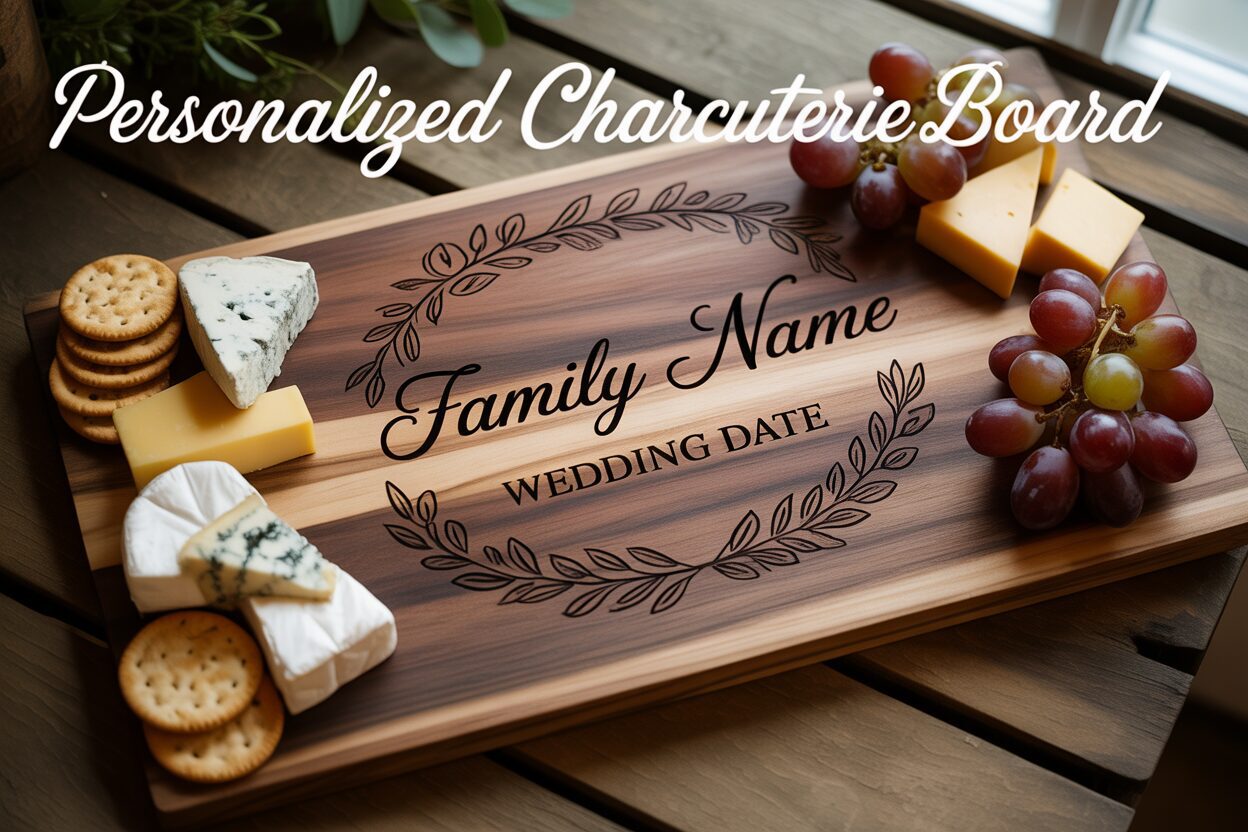
The best designs often stem from the occasion or the recipient’s personality. For a timeless and classic look, you can’t go wrong with monograms, family names, or initial letters elegantly scripted in a corner. Adding an “established” date beneath a family name is a popular choice for housewarming or anniversary gifts. For a truly special occasion like a wedding, creating a wedding gift charcuterie board offers a unique opportunity for personalization. Consider engraving the couple’s names and wedding date, a meaningful quote about love, or even the coordinates of where they met. For a more functional design, you could engrave subtle labels for different types of cheeses or meats, adding a professional touch for the host. If you have a cherished family recipe, scanning a handwritten version and converting it into a vector file for engraving can create an incredibly sentimental and one-of-a-kind piece.
Creating and Sourcing Your Digital Design
Once you have an idea, you need to translate it into a digital format your laser engraver can understand. If you’re comfortable with graphic design, software like Adobe Illustrator or the free alternative Inkscape are perfect for creating custom vector files from scratch. For simpler text-based designs, even programs like Canva can be used to export a high-resolution image. However, for those seeking intricate patterns or professional-looking artwork without the design work, pre-made design files are an invaluable resource. Look for a charcuterie board svg file online from marketplaces like Etsy or design resource websites. SVG (Scalable Vector Graphic) files are ideal for laser engraving because they can be scaled to any size without losing sharpness or quality, ensuring your final engraving is crisp and clean. These files are often pre-optimized for laser cutting and engraving, saving you significant time and potential frustration.
Mastering Placement and Scale
The final, critical step in the design phase is deciding on the size and placement of your artwork. This decision dramatically affects the board’s overall aesthetic and functionality. A common and practical choice is to place the design in a lower corner or along one of the shorter edges. This keeps the main serving area clear while still showcasing the beautiful personalization. For a purely decorative board, a large, central design can be a stunning focal point. To get a feel for the scale, print your design on paper at a few different sizes and place the cutouts on the board. This simple trick allows you to visualize the final result and ensure the design is proportional—not so small that it’s unnoticeable, and not so large that it overwhelms the natural beauty of the wood or slate. Remember to consider the grain of the wood; a simple design works best on a busy grain like acacia, while a fine-grained wood like maple can handle much more intricate detail. This thoughtful approach to sizing and placement is what elevates a simple engraving to a work of art.
The Laser Engraving Process Step-by-Step
With your board selected and your design file ready, you’ve reached the most exciting and technically demanding part of the project: the engraving itself. This phase requires precision, patience, and a strict adherence to safety protocols. Following these steps carefully will ensure a clean, professional-looking result while keeping you and your equipment safe.
Step 1: Preparation and Securing the Board
Before you begin, ensure your board’s surface is clean, dry, and free of any dust or debris. Wipe it down with a soft, lint-free cloth. For woods that are prone to smoke staining, like light-colored maple, a highly recommended pro-tip is to apply a layer of low-tack masking tape over the entire engraving area. The laser will cut through the tape cleanly, and when you peel it away after the job is done, it will take all the residual smoke and resin stains with it, leaving a perfectly crisp engraving on an unmarked surface. Next, place the board inside your laser engraver. It is absolutely crucial that the board is perfectly flat and securely positioned. Use hold-down pins, clamps, or a custom jig to ensure it cannot move or shift during the engraving process. Even a millimeter of movement can ruin the alignment and clarity of your design.
Step 2: Calibrating Laser Settings and Focus
This is the most critical step for achieving a high-quality engraving. The ideal settings for power, speed, and focus will vary dramatically depending on your specific laser machine and the material you are using. A dense hardwood like maple will require more power or a slower speed than a softer wood. Slate requires a completely different approach, typically higher speed and lower power, as you are ablating the surface rather than burning it.
- Focus: The laser beam must be perfectly focused on the surface of your material. An incorrect focus will result in a thick, blurry line instead of a sharp, fine one. Use your machine’s focusing tool to set the correct distance between the laser head and the board.
- Power and Speed: These two settings work in tandem. Higher power and slower speed result in a deeper, darker burn. Lower power and faster speed produce a lighter mark. There is no single “correct” setting. The goal is to find the sweet spot that produces the desired effect on your material. Always, always perform a test run on a scrap piece of the same material or on the back of the board itself. Engrave a small test pattern with a few different power and speed combinations to see which one yields the best result for your specific laser engraved cutting board.
Step 3: Framing, Engraving, and Essential Safety
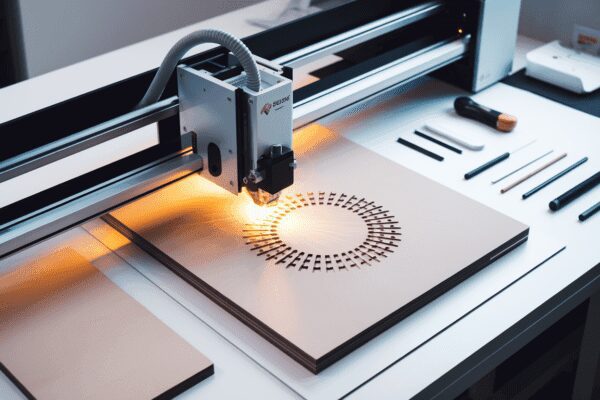
Once your settings are dialed in, load your design file into the laser software. Position the design over the area of the board you wish to engrave. Use your laser’s “frame” or “trace” function, which moves the laser head around the outer perimeter of your design without firing the laser. This allows you to visually confirm that the size and placement are exactly where you want them before you commit.
Before you press “start,” double-check your safety precautions.
- Ventilation: Ensure your laser’s exhaust fan and ventilation system are running and properly ducted to the outside. Burning wood and other materials creates smoke and fumes that are harmful to inhale.
- Eye Protection: Wear the safety glasses specifically rated for the wavelength of your laser. Standard sunglasses or safety glasses are not sufficient and will not protect your eyes from permanent damage.
- Supervision: Never leave a laser engraver running unattended. It is a powerful tool that uses focused heat, and there is always a risk of fire. Stay with the machine throughout the entire process.
With all checks complete, you can begin the engraving. Watch as your digital design is permanently etched into the board, transforming it from a blank slate into a personalized work of art.
Finishing Touches and Aftercare
The laser has finished its work, but your project isn’t complete just yet. The final steps of cleaning, finishing, and understanding proper care are what will elevate your piece from a simple engraved object to a durable, food-safe, and beautiful heirloom. This post-engraving process is essential for enhancing the wood’s natural beauty and ensuring the longevity of your personalized charcuterie board.
Post-Engraving Cleanup
Once you’ve safely removed the board from the laser bed, your first task is to clean up any residue. If you used masking tape, carefully peel it away. This will remove the majority of the smoke and resin staining from the surface, leaving a clean area around your design. You will still need to clean the engraved portion itself, which will contain some soot. For wood, a soft-bristled brush (an old toothbrush works perfectly) dipped in a small amount of isopropyl alcohol can be used to gently scrub within the engraved lines. This helps lift out any stubborn resin buildup without damaging the wood. Wipe the entire board down with a clean, dry cloth afterward. For slate, the process is much simpler. A damp cloth is usually all that’s needed to wipe away the fine dust created during the ablation process, revealing the crisp, light-colored engraving beneath.
Applying a Food-Safe Finish to Wood
This step is arguably the most transformative for a wooden board. Applying a finish not only protects the wood from moisture and stains but also dramatically enriches its color and makes the grain pop, creating a stunning contrast with the engraved design. It is absolutely imperative that you use a food-safe finish. Never use industrial varnishes or sealants. The two best options are:
- Food-Grade Mineral Oil: This is the industry standard for cutting boards and butcher blocks. It’s inexpensive, readily available, and penetrates deep into the wood fibers to hydrate and protect from within.
- Board Butter/Conditioner: This is typically a blend of food-grade mineral oil and natural beeswax or carnauba wax. The oil penetrates, while the wax creates a protective barrier on the surface, offering superior water resistance and a soft, beautiful sheen.
To apply the finish, pour a generous amount of oil or a scoop of butter onto the clean, dry board. Using a soft, lint-free cloth, work the finish into the wood in a circular motion, making sure to cover every surface, including the edges and the engraved area itself. Be liberal with the application; the wood, especially if it’s unfinished, will be thirsty. Let the board sit for at least a few hours, or ideally overnight, to allow the oil to fully penetrate. Afterward, take a clean cloth and buff off any excess, leaving a smooth, non-greasy surface.
Long-Term Care for Your Engraved Board
A well-made engraved charcuterie board can last a lifetime with proper care. Provide these instructions to the recipient if it’s a gift.
- Washing: Hand wash the board with mild soap and warm water immediately after use. Never place a wooden or slate board in the dishwasher, as the intense heat and detergents will cause wood to warp and crack. Do not let the board soak in water.
- Drying: After washing, dry the board immediately with a towel. Allow it to air dry completely, standing it on its edge to ensure air can circulate around all sides.
- Maintenance: For wooden boards, reapply a coat of food-safe mineral oil or board butter whenever the wood starts to look dry or loses its luster, typically once a month with regular use. This simple act will keep the wood conditioned, prevent cracking, and maintain its beautiful appearance for years to come.
Conclusions
Creating a personalized charcuterie board is a rewarding project that combines craftsmanship with creativity. By following these steps, you can produce a stunning, food-safe piece that’s perfect for gifting or selling. Whether for a wedding, housewarming, or your own home, an engraved charcuterie board is a functional piece of art that is sure to impress.
Frequently Asked Questions
Q: What is the best type of wood for a beginner to laser engrave?
A: Maple is highly recommended for beginners. Its light color, tight grain, and consistent density create a high-contrast, crisp engraving with minimal issues like charring or bleeding. It is also very durable and food-safe.
Q: Is it safe to serve food on a laser engraved board?
A: Yes, as long as you follow two key rules. First, start with a food-safe material that has no chemical varnishes or lacquers. Second, after engraving and cleaning, treat the board with a 100% food-safe finish, such as food-grade mineral oil or a beeswax conditioner. This ensures the entire board is safe for food contact.
Q: Can I put my engraved wooden charcuterie board in the dishwasher?
A: No, you should never put a wooden board in the dishwasher. The high heat and harsh detergents will strip the wood of its natural oils, causing it to warp, crack, and split. Always hand wash with mild soap and warm water, then dry it immediately.
Q: Why is my engraving uneven on my Acacia wood board?
A: Acacia wood is known for its dramatic and inconsistent grain patterns, which contain varying densities. The laser reacts differently to the harder, darker parts of the grain versus the softer, lighter parts, resulting in an engraving that can vary in depth and color. This is a natural characteristic of the wood and can contribute to a rustic look.
Subscribe to Our Newsletter
And enjoy FREE Download Files, SALE Alerts and Inspiring TIPS
Pricing Your Laser Engraving Work for Profitability
A Comprehensive Guide to Pricing Your Laser Engraving Services
A Comprehensive Guide on How to Price Laser Engraving Services
Charcuterie Board Engraving File – Wine & Grapes 3D Illusion…
$4.00Original price was: $4.00.$3.00Current price is: $3.00.(25% off)
Bee and Honey Jar Charcuterie Board Engraving File | PNG Download #007…
$4.00Original price was: $4.00.$3.20Current price is: $3.20.(20% off)
Valentine Love Captions: 6 Charcuterie Board Engraving Files…
$8.00Original price was: $8.00.$5.60Current price is: $5.60.(30% off)
American Eagle Flag Laser Engraving File for Charcuterie & Cutting…
$4.00Original price was: $4.00.$2.80Current price is: $2.80.(30% off)