

 Français
 Deutsch
 Español
 Italiano
Crafting the Perfect Personalized Charcuterie Board
Dec
Estimated reading time: 9 minutes
Key Takeaways
- The choice of wood is critical; closed-grain hardwoods like maple, cherry, and walnut offer the best balance of food safety, durability, and engraving quality.
- A successful design requires thoughtful conceptualization for the recipient and occasion, followed by precise digital creation using vector software to ensure clean engraving results.
- Mastering laser engraving involves meticulous preparation, such as using masking tape to prevent smoke stains, and testing power and speed settings for the desired effect.
- Proper finishing with a food-safe oil or wax and providing clear long-term care instructions are essential to protect the board and ensure its longevity.
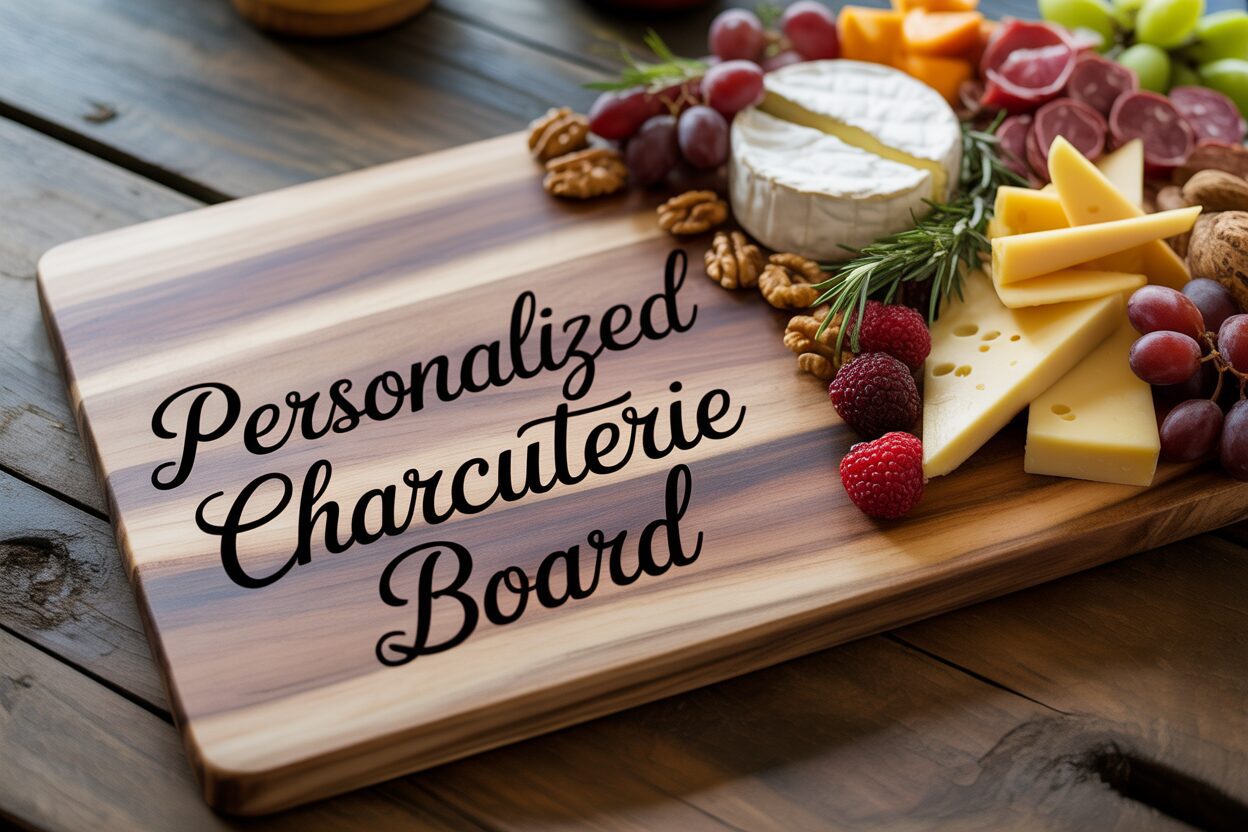
Discover the art of creating a stunning personalized charcuterie board using laser engraving techniques. This guide will walk you through everything from selecting the perfect wood charcuterie board to applying the finishing touches, helping you craft beautiful and memorable charcuterie board gifts that are sure to impress family, friends, or even customers.
Choosing the Right Wood for Your Charcuterie Board
The foundation of any exceptional wood charcuterie board is, quite simply, the wood itself. Your choice will dictate not only the board’s final appearance but also its longevity, food safety, and ability to serve as a perfect canvas for laser engraving. Selecting the right material is a critical step that balances aesthetics with practicality, ensuring the final product is a cherished gift or a profitable item that stands the test of time. The ideal woods for this purpose are hardwoods with a closed grain, a characteristic that is paramount for both hygiene and durability.
Key Wood Characteristics for Charcuterie Boards
Before diving into specific wood types, it’s essential to understand the qualities that make a species suitable. The three most important factors are hardness, grain structure, and food safety. Hardness, often measured on the Janka scale, determines how well the board will resist scratches and knife marks from regular use. A wood that is too soft will damage easily, while one that is excessively hard can dull knives. The grain structure is even more critical. Closed-grain woods, like the ones we’ll discuss, have very small pores. This prevents them from easily absorbing bacteria, moisture, and odors from foods, making them safer and easier to clean. Open-grained woods like oak and ash are generally unsuitable for this reason. Finally, the wood must be non-toxic and, when finished, sealed with a food-safe oil. These properties ensure that the board is not only a beautiful display piece but a functional and safe surface for serving food.
Top Wood Choices for Engraving and Serving
Here are the most popular and reliable woods for creating a premium engraved charcuterie board:
- Maple: Often considered the industry standard, hard maple is a fantastic choice. Its high density makes it incredibly durable and resistant to scratches. As a closed-grain wood, it is highly food-safe and easy to maintain. From an engraving perspective, maple is a dream to work with. Its light, creamy color creates a high-contrast backdrop for laser engraving, allowing intricate designs and delicate text to pop with exceptional clarity. This makes it an ideal and affordable option for detailed charcuterie board gifts.
- Cherry: Known for its beautiful, warm reddish-brown hue, cherry adds a touch of elegance and richness. While slightly softer than hard maple, it is still a durable, closed-grain hardwood perfectly suitable for charcuterie boards. A unique characteristic of cherry is that its color deepens and develops a rich patina over time, making each board a truly one-of-a-kind piece. Laser engraving on cherry results in a deep, tonal marking that is sophisticated and warm, blending beautifully with the wood’s natural color.
- Walnut: For a luxurious, high-end feel, walnut is unparalleled. Its deep, chocolate-brown colors and complex grain patterns make a stunning statement piece. Walnut is a hard, durable, and closed-grain wood, checking all the boxes for functionality and food safety. When laser engraved, it produces a subtle, dark-on-dark effect that exudes sophistication. While the contrast is lower than on maple, the result is an elegant, premium look that is highly sought after for corporate gifts and special occasions.
- Bamboo: While technically a grass, bamboo is a popular and sustainable option. It is extremely hard and dense, non-porous, and naturally resists water. Its light color provides excellent contrast for engraving, similar to maple, but often at a lower price point. However, it’s important to note that bamboo’s hardness can be tough on knives, and the final board is constructed from laminated strips, so the quality can vary depending on the manufacturer and the adhesives used.
Ultimately, the best wood depends on your desired aesthetic and budget. Maple offers classic performance and high-contrast engraving, cherry provides warmth and character, and walnut delivers unmatched luxury. Each of these options provides the durability and food-safe foundation needed to craft a perfect personalized charcuterie board that will be enjoyed for years.
Designing Your Custom Charcuterie Board
With your wood selected, the next crucial stage is transforming it from a simple blank slate into a meaningful work of art. The design phase is where the true personalization happens, turning a functional item into a cherished keepsake. A thoughtful design elevates a custom charcuterie board from a simple kitchen tool to a centerpiece that tells a story. This process can be broken down into clear, manageable steps, from initial brainstorming to creating a finalized digital file ready for the laser.
Conceptualizing Your Design
The first step is always brainstorming. Before opening any design software, consider the purpose and the recipient of the board. Is it a wedding gift? A housewarming present? A promotional item for a business? The occasion will heavily influence the design. For a personalized cheese board intended as a wedding gift, incorporating the couple’s names, wedding date, or a classic monogram is a timeless choice. For a housewarming gift, a family name with an “Established” date is always popular. Think about the recipient’s style: are they minimalist, rustic, modern, or whimsical? A sleek, geometric border would suit a modern taste, while an intricate floral wreath would appeal to someone with a more classic or rustic aesthetic. Don’t be afraid to incorporate unique elements like a favorite quote, the coordinates of a special place, or even a family recipe handwritten and then digitized. The more personal the details, the more treasured the final product will be.
Layout, Composition, and Digital Creation
Once you have a concept, it’s time to think about layout. A simple paper sketch can be invaluable here. Consider the shape and size of your board. A design that works on a rectangular board might need to be adapted for a round one. Pay attention to elements like handles or live edges, and plan your design to work with them, not against them. A common and effective placement is in a corner or along one edge, which keeps the central serving area clear while still making a visual impact. For the digital creation, vector graphics software is essential. Programs like Adobe Illustrator, CorelDRAW, or the free alternative Inkscape allow you to create designs that can be scaled to any size without losing quality, which is critical for clean laser engraving. Start by creating a digital template that matches the exact dimensions of your board. This allows you to visualize the placement and scale of your design accurately.
When adding elements, pay close attention to the details.
- Text and Fonts: Choose fonts that are legible and match the overall style. Script fonts are elegant but ensure the lines are thick enough to be engraved clearly without burning away. Serif fonts offer a classic look, while sans-serif fonts provide a clean, modern feel. Once you finalize your text, it is crucial to convert it to paths or outlines in your software. This turns the letters into shapes, ensuring the laser engraver reads them correctly, regardless of whether the font is installed on the machine’s computer.
- Graphics and Patterns: Whether you are creating a custom illustration or using pre-made assets, simplicity is often key. Very fine, intricate lines can get lost in the wood grain or may not engrave cleanly. Ensure your design has sufficient line weight and that there is enough negative space for the details to be clear. For complex patterns, running a small test engrave on a scrap piece of the same wood is always a wise investment of time.
By carefully moving from a thoughtful concept to a well-executed digital file, you ensure your design not only looks beautiful but is also perfectly optimized for the laser engraving process to follow.
Laser Engraving Techniques for Wood
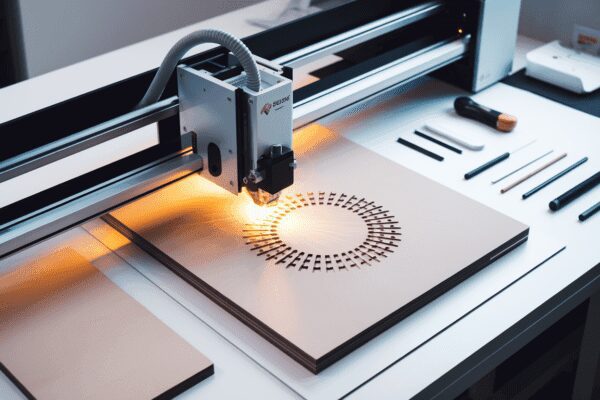
Once your digital design is finalized, it’s time to bring it to life on wood through the precise art of laser engraving. This process uses a focused beam of light to vaporize or burn the wood’s surface, creating a permanent, detailed mark. Mastering this technique is key to producing a professional-quality personalized charcuterie board. Success hinges on meticulous preparation, understanding your machine’s parameters, and prioritizing safety.
Preparing for a Flawless Engraving
Before the laser even fires, proper preparation of the wood surface is essential for achieving a crisp, clean result. First, ensure your board is perfectly clean, dry, and free of any dust or debris. For an exceptionally clean engraving free from smoke residue or “halos,” the use of application tape or a wide masking tape is a non-negotiable professional step. Carefully apply the tape over the entire area to be engraved, ensuring there are no air bubbles. This protective layer will catch the smoke and resin that rises from the wood during the engraving process, which can then be peeled away, leaving behind a perfectly sharp design without any surrounding discoloration. The final preparatory step is to set the laser’s focal height. Accurate focus is critical; an out-of-focus laser will produce a wider, less defined line, resulting in a blurry and unprofessional engraving.
Mastering Your Laser Parameters
The appearance of your engraving—from a light, subtle etching to a deep, dark burn—is controlled by the interplay of three main settings on your laser engraver. Achieving your desired look for an engraved charcuterie board requires a bit of testing, as every piece of wood can react differently.
- Power: This setting determines the intensity of the laser beam. Higher power settings will result in a deeper and darker engraving, as more material is vaporized.
- Speed: This controls how fast the laser head moves across the wood. A slower speed allows the laser to dwell on one spot for longer, also creating a deeper and darker mark. Conversely, a higher speed results in a lighter, more superficial engraving.
- DPI (Dots Per Inch) or LPI (Lines Per Inch): This setting dictates the resolution of your engraving, or how close together the engraved lines are. A higher DPI will create a darker, more filled-in appearance, while a lower DPI can be used for a lighter look or faster engraving times.
To achieve a deep, rustic burn perfect for a bold family name, you would use a combination of higher power and slower speed. For a delicate, elegant script monogram, you would opt for lower power and a faster speed. It is imperative to always run a small test of your settings on a scrap piece of the same wood or on an inconspicuous area like the back of the board before committing to your final piece.
Finally, safety and ventilation must be your top priorities. Laser engraving wood creates a significant amount of smoke and particulates that are harmful if inhaled. Always operate your laser in a well-ventilated area with a proper exhaust system that vents to the outdoors. Wood is also flammable, so never leave a laser cutter unattended while it is operating and always have a fire extinguisher readily accessible. By following these techniques and precautions, you can consistently produce stunning, high-quality engraved boards for any occasion.
Finishing and Caring for Your Engraved Board
The laser has done its work, but the journey of creating a perfect wood charcuterie board is not yet complete. The finishing stage is where you transform the raw, engraved piece into a polished, protected, and food-safe product ready for use. This critical process not only enhances the wood’s natural beauty, bringing out the depth and color of the grain, but also ensures the board’s longevity. Proper finishing and providing clear care instructions are the final steps in guaranteeing that your personalized charcuterie board remains a treasured and functional item for years.
Post-Engraving Cleanup and Sanding
After the engraving is finished, the first step is cleanup. If you used masking tape, carefully peel it away. This should remove the majority of the smoke residue. Use a soft-bristled brush, like a nylon brush or an old toothbrush, to gently scrub out any remaining debris from the crevices of the engraved design. A quick blast of compressed air can also be very effective. Next comes sanding, which creates a silky-smooth surface. Using an orbital sander or sanding by hand, start with a 220-grit sandpaper. Be careful not to sand too aggressively over the engraved area, as this can soften the crisp edges of your design. The goal is to smooth the rest of the board’s surface. For a truly professional finish, you can “raise the grain.” After the initial sanding, lightly mist the board with water and let it dry completely. This will cause the wood fibers to swell and stand up. A final, light sanding with a higher grit, such as 320 or 400, will knock these fibers down, resulting in an exceptionally smooth finish that will stay that way even after its first washing.
Applying a Food-Safe Finish
Sealing the wood is paramount. An unfinished board will absorb moisture, stains, and bacteria. You must use a finish that is 100% food-safe. Never use finishes like polyurethane or lacquer that are not intended for food contact surfaces. The two best options are:
- Mineral Oil: This is the most common and accessible choice. It is an inert, non-toxic oil that penetrates the wood pores, hydrating the wood and preventing it from drying out and cracking. To apply, generously pour food-grade mineral oil onto the board and use a clean, lint-free cloth to spread it evenly over all surfaces, including the edges. Let the oil soak in for at least a few hours, or preferably overnight. The wood will absorb what it needs. Afterwards, wipe off any excess oil with another clean cloth.
- Board Cream or Wax: For an extra layer of protection, a board conditioner or cream is an excellent choice. These products are typically a blend of mineral oil and a natural wax, such as beeswax or carnauba wax. The oil penetrates and hydrates, while the wax creates a protective barrier on the surface that helps repel water. Apply a thin layer of the cream, let it sit for about 15-20 minutes, and then buff it to a soft sheen with a clean cloth.
It’s important to instruct the end-user to avoid using cooking oils like olive or vegetable oil, as these can go rancid over time.
Long-Term Care and Maintenance
A beautiful charcuterie board requires simple but consistent care. Providing these instructions with your gift or product adds significant value.
- Washing: Hand wash only with a soft sponge, mild soap, and warm water. Never let the board soak in water and never put it in the dishwasher, as the excessive heat and water will cause it to warp and crack.
- Drying: Immediately after washing, hand dry the board with a towel. Allow it to air dry completely by standing it on its edge to ensure even airflow on all sides.
- Oiling: Reapply a food-safe mineral oil or board cream once a month, or whenever the wood looks dry or dull. This simple step is the single most important thing for maintaining the board’s health and beauty.
Conclusions
Now you have the knowledge and inspiration to create your own engraved charcuterie board. Whether for personal use, as a heartfelt gift, or as a new product in your business, a custom charcuterie board is a fantastic project that combines creativity with functionality. Experiment with different designs and techniques to develop your unique style and create truly one-of-a-kind pieces.
Frequently Asked Questions
Q: What is the best wood for a beginner to use for an engraved charcuterie board?
Interested in more Charcuterie Board? Check out our Charcuterie Board laser file designs: Click here!
A: Maple is often considered the best choice for beginners. Its light, uniform color provides a high-contrast background that makes engravings pop, and its closed-grain, durable nature is forgiving. It is also generally more affordable than woods like cherry or walnut.
Q: Can I use any oil to finish my charcuterie board?
A: No, you must use a 100% food-safe finish. The best and most common choice is food-grade mineral oil or a board cream made from mineral oil and beeswax. Avoid using cooking oils like olive or vegetable oil, as they can become rancid over time.
Q: Do I really need to use masking tape before engraving?
A: While not strictly mandatory, using masking tape is a professional technique that is highly recommended. It prevents smoke and resin from staining the wood surface around the design, resulting in a much crisper, cleaner engraving with sharp contrast.
Q: How should I clean my engraved wood charcuterie board?
A: Always hand wash your board with mild soap and warm water. Never put it in the dishwasher or let it soak in the sink. After washing, dry it immediately with a towel and let it air dry completely by standing it on its edge.
Subscribe to Our Newsletter
And enjoy FREE Download Files, SALE Alerts and Inspiring TIPS
Pricing Your Laser Engraving Work for Profitability
A Comprehensive Guide to Pricing Your Laser Engraving Services
A Comprehensive Guide on How to Price Laser Engraving Services
Charcuterie Board Engraving File – Wine & Grapes 3D Illusion…
$4.00Original price was: $4.00.$3.00Current price is: $3.00.(25% off)
Bee and Honey Jar Charcuterie Board Engraving File | PNG Download #007…
$4.00Original price was: $4.00.$3.20Current price is: $3.20.(20% off)
Valentine Love Captions: 6 Charcuterie Board Engraving Files…
$8.00Original price was: $8.00.$5.60Current price is: $5.60.(30% off)
American Eagle Flag Laser Engraving File for Charcuterie & Cutting…
$4.00Original price was: $4.00.$2.80Current price is: $2.80.(30% off)