

 Français
 Deutsch
 Español
 Italiano
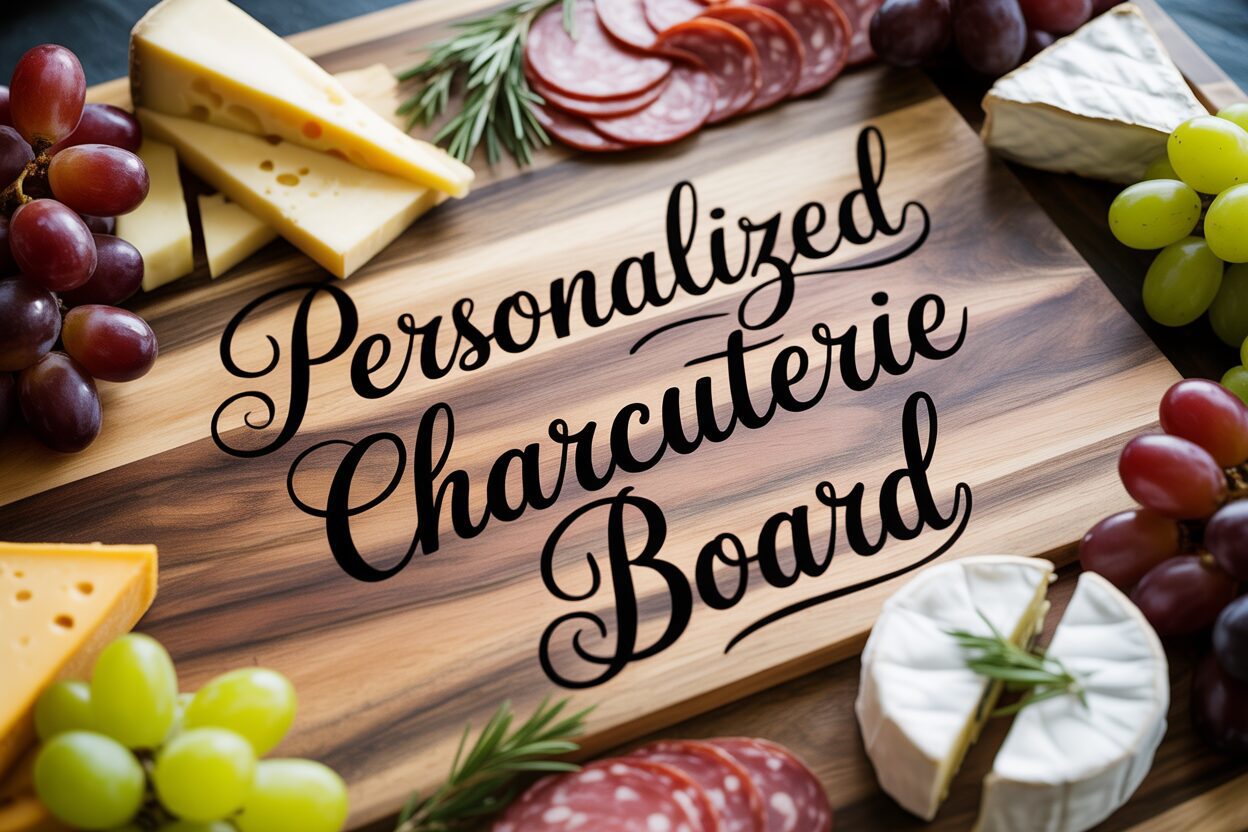
A Beginner’s Guide to Crafting a Personalized Charcuterie Board
Feb
Estimated reading time: 8 minutes
Key Takeaways
- Material Matters: The choice of material, such as maple for high contrast or slate for a modern look, significantly impacts the appearance and quality of the final engraving.
- Vector is Victor: For sharp, clean, and scalable results, always use vector files (SVG, AI) for your designs, as they provide precise paths for the laser to follow, unlike pixel-based raster images (JPG, PNG).
- Test First, Engrave Second: Always perform a test run on a scrap piece of the exact same material to dial in the perfect power and speed settings, preventing costly mistakes on your final board.
- Finish for Food Safety: After engraving, thoroughly clean the board and apply a 100% food-safe finish, like mineral oil and beeswax, to protect the wood and ensure it is safe for serving food.
Table of Contents
- Choosing the Perfect Board and Materials
- Finding and Preparing Your Laser Engraving Designs
- The Engraving Process and Food-Safe Finishing
- Conclusions
- Frequently Asked Questions
Discover the joy of creating a unique culinary masterpiece. This guide provides a comprehensive walkthrough for making a personalized charcuterie board using laser engraving techniques. We will explore everything from selecting the right materials and designs to the final finishing touches, empowering you to craft a beautiful and functional piece for your home or as a heartfelt gift.
Choosing the Perfect Board and Materials
The foundation of any stunning engraved charcuterie board is the material itself. Your choice of wood or slate not only dictates the board’s final appearance and durability but also significantly influences the outcome of the laser engraving process. Understanding the unique properties of each material is the first step toward creating a truly professional-quality piece.
Interested in more Charcuterie Board? Check out our Charcuterie Board laser file designs: Click here!
Choosing Your Wood: Grain, Hardness, and Contrast
When selecting wood, you are choosing a canvas that will interact with your design. Different species offer unique colors, grain patterns, and engraving characteristics. Here are some of the most popular choices for wood laser engraving:
- Bamboo: Technically a grass, bamboo is a popular, sustainable, and affordable option. It’s very hard and has a distinct, modern look due to its construction from laminated strips. When engraved, bamboo produces a rich, dark brown mark. However, its fibrous nature and the presence of glue lines between strips can sometimes lead to inconsistencies in the engraving depth and color. It’s best suited for bold, simple designs rather than extremely fine details.
- Acacia: Known for its dramatic and often irregular grain patterns and rich, warm tones, acacia is a visually striking choice. It’s a dense hardwood that is naturally water-resistant, making it excellent for serving boards. Acacia engraves beautifully, yielding a dark, high-contrast result that stands out against the varied wood tones. The prominent grain can become part of the design itself, adding a unique, rustic character.
- Walnut: For a touch of luxury and sophistication, walnut is an exceptional choice. This premium hardwood features a deep, dark chocolate color with a fine, straight grain. The laser creates a dark burn, resulting in a subtle, low-contrast engraving. This creates a sophisticated “tone-on-tone” effect that is elegant and understated. While the contrast is lower, the clarity of the engraving on walnut’s smooth grain is superb.
- Maple: If your design is intricate and detailed, maple is one of the best materials you can choose. As a light-colored hardwood with a very fine, uniform grain, it provides the perfect high-contrast canvas. The laser produces a clean, dark burn that makes every detail pop. Its hardness, or Janka rating, is high, making it extremely durable and resistant to knife marks, which is a great feature for a functional charcuterie board.
A Modern Alternative: The Elegance of Slate
For a departure from traditional wood, consider slate. This natural stone offers a sleek, modern aesthetic that is both rustic and refined. When laser engraved, slate produces a brilliant, permanent light-gray or white mark against its dark, charcoal-colored surface. The contrast is incredibly sharp, making it perfect for detailed text, logos, and intricate patterns. While not suitable for cutting due to its brittle nature, it excels as a cheese board, serving platter, or a set of matching engraved slate coasters. Slate is non-porous and easy to clean, adding to its practical appeal.
Sourcing Your Canvas: Tips for Finding Quality Blanks
The quality of your raw material is paramount. To ensure a safe and beautiful result, source boards that are specifically intended for food use and engraving. Look for unfinished and untreated wood boards. Pre-existing finishes, stains, or oils can interfere with the engraving process and, more importantly, can release harmful fumes when vaporized by the laser. Always check that the board is perfectly flat, as any warping will cause inconsistent focus and blurry results. Reputable sources include woodworking suppliers, specialty kitchen stores, and online retailers that sell “laser-ready” blanks. For slate, ensure you purchase pieces of uniform thickness and check if they are treated with a food-safe sealant; often, it’s best to buy unsealed slate and apply a food-safe mineral oil or sealant yourself after engraving.
Finding and Preparing Your Laser Engraving Designs
Now that you have selected the perfect wood or slate canvas, the next step is to choose a design that will transform it from a simple kitchen accessory into a personal work of art. The quality of your digital file is just as important as the quality of your board, as it directly dictates the sharpness and clarity of the final engraving. Understanding the fundamentals of digital design files is crucial for achieving professional-level results.
The Blueprint for Success: Vector vs. Raster Files
At the heart of preparing your laser engraving designs is the distinction between two primary file types: vector and raster.
- Raster Images: These files (like JPG, PNG, or BMP) are made up of a grid of tiny squares called pixels. They are ideal for photographs but have a significant drawback for engraving: they lose quality when scaled up. If you enlarge a low-resolution raster image, the edges will become blurry and pixelated, which the laser will replicate, resulting in a fuzzy, unprofessional finish.
- Vector Files: These files (like SVG, AI, or DXF) are the gold standard for laser engraving. Instead of pixels, they are constructed from mathematical paths, lines, and curves. This means they can be scaled to any size—from a small coaster to a large serving platter—without any loss of quality. The laser follows these precise paths, resulting in incredibly crisp, clean, and sharp lines. For text, logos, and line art, always use a vector format.
Simply put, a vector file provides the laser with a perfect blueprint, ensuring every curve and corner of your design is flawlessly etched into the surface.
From Blank Canvas to Personal Treasure: Design Inspiration
The right design is what makes a personalized charcuterie board truly special. The possibilities are endless, limited only by your imagination. Consider who the board is for and the occasion. Some popular ideas include:
- Monograms and Family Names: A classic and elegant choice, perfect for wedding gifts, anniversaries, or housewarmings. Engraving a family name with an “Established” date creates an instant heirloom.
- Custom Logos: Ideal for corporate gifts, promotional items, or for a small business owner. A real estate agent might gift a custom cutting board with their logo to new homeowners.
- Intricate Patterns: Delicate floral borders, geometric patterns, or mandala designs can add a beautiful decorative frame to the board, leaving the center open for serving.
- Meaningful Text: This could be a favorite kitchen-related quote, a cherished family recipe handwritten by a loved one (which can be vectorized), or the coordinates of a special place.
Digital Craftsmanship: Preparing Your File for the Laser
Once you have a design concept, you’ll need to prepare it using software. Design programs like Adobe Illustrator or the free alternative Inkscape are perfect for creating or modifying vector files. Here, you can type out names, combine graphic elements, and fine-tune your layout. One of the most critical steps is to convert all text to outlines or paths before saving. This action essentially turns the font into a fixed vector shape, ensuring the laser software sees it exactly as you designed it, even if it doesn’t have that specific font installed. After perfecting your design, you will import the final SVG or DXF file into your laser control software, such as LightBurn. This program is where you will position the design precisely on your board’s digital workspace and assign the power and speed settings for the engraving, bringing your digital creation to life.
The Engraving Process and Food-Safe Finishing
With your design finalized and your material chosen, it’s time to bring your creation to life at the laser. This stage combines precise setup with the transformative power of the laser, followed by the crucial finishing touches that make your board both beautiful and functional. Adhering to a careful process ensures safety and a flawless result every time.
From Digital File to Physical Etching: The Engraving Process
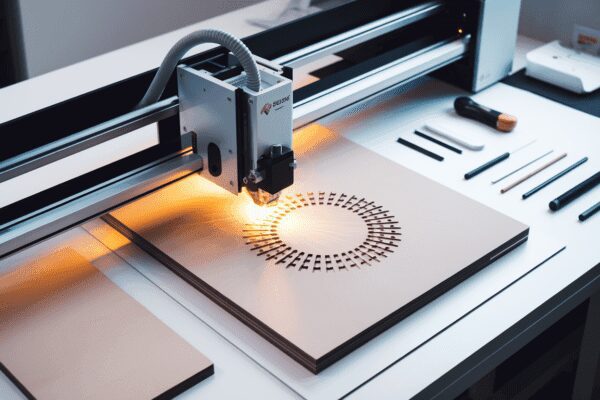
Precision begins before the laser even fires. First, place your charcuterie board on the laser bed. It is absolutely essential that the board is perfectly flat and cannot move during engraving. Use honeycomb pins, small clamps, or heavy weights along the edges to secure it firmly in place. Any slight shift will cause misalignment and ruin your design. Next, set the laser focus. The laser beam is most powerful at a specific focal point; incorrect focus will result in a wide, blurry engraving line instead of a sharp, crisp one. Use your machine’s focusing tool or autofocus feature to set the correct distance between the laser nozzle and the surface of your material.
Now, it’s time to dial in your settings. This is the most critical step and one that requires a test run. Always use a scrap piece of the exact same material to test your power and speed settings first.
- For Wood: You are burning the material, so you’ll need a balance of power and speed. A good starting point for a hardwood like maple might be around 25-30% power at a speed of 300 mm/s. Too much power or too slow a speed will cause excessive charring and a “bleeding” effect, while too little power or too high a speed will create a faint, unimpressive mark.
- For Slate: You are not burning slate; you are ablating or fracturing the surface to create a light-colored mark. This requires much lower power and higher speed. A typical starting point could be 15% power at 400 mm/s. Using too much power on slate can crack or chip it.
Once you are happy with the result on your test piece, position your final design over the board in your laser software, double-check your focus and origin point, and begin the engraving.
The Final Touch: Cleaning and Food-Safe Finishing
After the laser has finished, your engraved charcuterie board will be covered in a fine layer of soot and resin residue. For wood, gently clean the engraved area with a soft-bristled brush and a cloth lightly dampened with isopropyl alcohol. This will lift the residue out of the engraving without smearing it across the wood grain. For slate, a simple wipe with a damp cloth is usually sufficient. Allow the board to dry completely.
This final step is non-negotiable for any custom cutting board intended for use with food. Finishing not only protects the wood from moisture and bacteria but also deeply enriches its color and makes the engraved design pop with contrast. Only use 100% food-safe finishes. The best and most common choice is a combination of mineral oil and beeswax.
- First Coat (Mineral Oil): Generously apply food-grade mineral oil to the entire surface of the board, front, back, and sides. Let the oil soak in for at least 20-30 minutes, or even overnight. The oil penetrates deep into the wood fibers, hydrating them and preventing cracking.
- Second Coat (Board Cream): After wiping off any excess mineral oil, apply a board cream or conditioner, which is typically a mix of mineral oil and beeswax. The beeswax seals the pores on the surface, creating a water-resistant barrier and giving the board a beautiful, smooth sheen. Buff it in with a clean, lint-free cloth.
This finishing process turns your project into a durable, safe, and professional-quality kitchen masterpiece, ready for its delicious debut.
Conclusions
You now have the knowledge to create a stunning personalized charcuterie board. By selecting the right materials, preparing your design, and following the correct laser engraving process, you can craft beautiful, functional art. This skill opens up endless possibilities for creating custom gifts like an engraved slate coaster set or other personalized kitchenware for any occasion.
Frequently Asked Questions
Q: What’s the best type of wood for a detailed laser engraving design?
A: Maple is one of the best choices for intricate designs. Its light color and fine, uniform grain provide a high-contrast canvas, making every detail pop.
Q: Why do I need to use a vector file (like SVG) instead of a JPG for laser engraving?
A: Vector files are made of mathematical paths, not pixels. This allows them to be scaled to any size without losing quality, ensuring the laser etches incredibly crisp, clean lines. Raster files like JPGs become blurry and pixelated when enlarged, resulting in a fuzzy engraving.
Q: Is it safe to use a laser-engraved cutting board for food?
A: Yes, it is safe as long as you follow two key steps. First, start with an unfinished, untreated board to avoid vaporizing harmful chemicals. Second, after engraving and cleaning, you must seal the board with a 100% food-safe finish, like mineral oil and beeswax, to protect the wood and create a safe surface for food.
Q: What happens if my laser power settings are wrong for slate?
A: Slate requires much lower power than wood. Using too much power can easily crack, chip, or otherwise damage the slate instead of creating the desired light-gray mark. Always test your settings on a scrap piece first to find the right balance of low power and high speed.
Subscribe to Our Newsletter
And enjoy FREE Download Files, SALE Alerts and Inspiring TIPS
A Comprehensive Guide to Pricing Your Laser Engraving Services
A Comprehensive Guide on How to Price Laser Engraving Services
How to Price Your Laser Engraving and Cutting Services
Charcuterie Board Engraving File – Wine & Grapes 3D Illusion…
$4.00Original price was: $4.00.$3.00Current price is: $3.00.(25% off)
Bee and Honey Jar Charcuterie Board Engraving File | PNG Download #007…
$4.00Original price was: $4.00.$3.20Current price is: $3.20.(20% off)
Valentine Love Captions: 6 Charcuterie Board Engraving Files…
$8.00Original price was: $8.00.$5.60Current price is: $5.60.(30% off)
American Eagle Flag Laser Engraving File for Charcuterie & Cutting…
$4.00Original price was: $4.00.$2.80Current price is: $2.80.(30% off)